
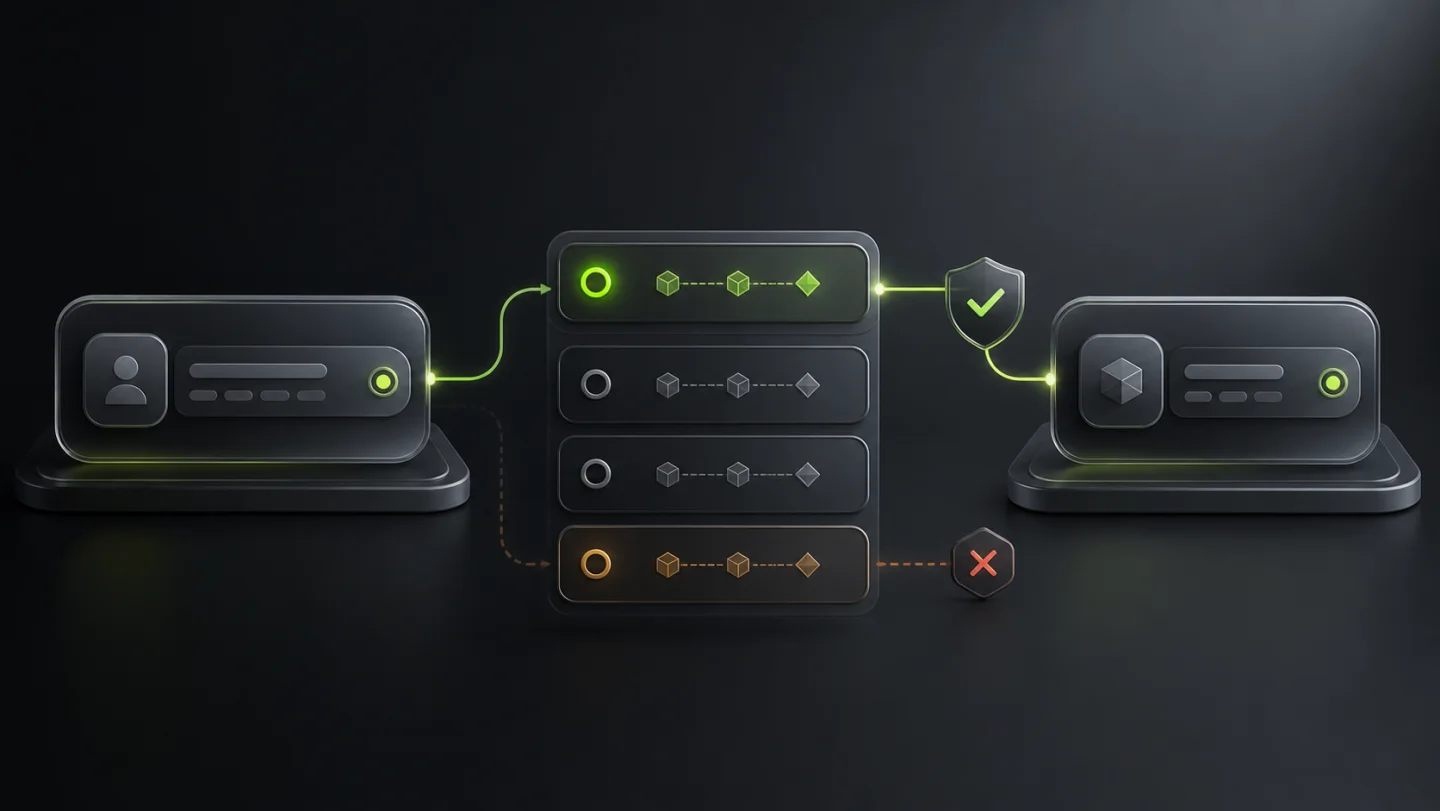
The same USDT is available on multiple networks. Low fees are not enough: both parties must support the same blockchain.
Step 1. Confirm the network
Get the network name in writing and verify it in the receiving interface. The token abbreviation alone is insufficient.
Step 2. Check the fee
Make sure the wallet has the correct fee asset, such as ETH on Ethereum or TRX on TRON.
 MSCAN
The recipient defines the valid network
Step 3. Verify the address
Compare the first and last characters, confirm details through a second channel and review address context.
Step 4. Start small
For a material amount or new address, a test transfer confirms the network and details before the main operation.
FAQ
Clear answers to common questions
How should work be divided inside a team?
The recipient confirms the network, the sender compares the route, and an accountable owner approves total cost.
How can human error be reduced?
Use the same short checklist, independent confirmation of critical details and preserved history. A second-person review is useful for material actions.
Is TRC20 always cheaper than ERC20?
Often, but not always. Exchanges set their own withdrawal charges and network conditions change.
Is a test step needed before the main action?
A test is not mandatory every time but is especially useful for a new address, new network and material value.
Which network should be used for USDT?
Use a network supported by both sender and recipient, then compare cost, speed and availability of the fee asset.
Which information should be checked first?
The recipient confirms the deposit network first; the sender then finds an exact match among withdrawal options. Do not move to a conclusion until the primary details and starting facts are consistent.
When should the information be reviewed again?
Select the route again after a recipient, address, platform, network-availability or fee-structure change.
What should happen when sources conflict?
Pause the action, record the conflict and locate a primary or independent source. A lack of clarity should not be replaced by a convenient assumption.
Can this decision be fully automated?
No. Automation can collect and prioritise signals, but transaction purpose, documents, party explanations and the final decision require human assessment.
When is a test transfer appropriate?
Use one for a new address, material amount, network change or any uncertainty around payment details.
Which limitations of the method matter most?
The lowest fee does not make a route correct when the recipient or next service does not support the network.
Is this approach useful for an individual user?
Yes. An individual usually needs fewer addresses and a lighter process, but network, payment-detail and source verification remain just as important.
This material is informational and is not legal, tax or investment advice.